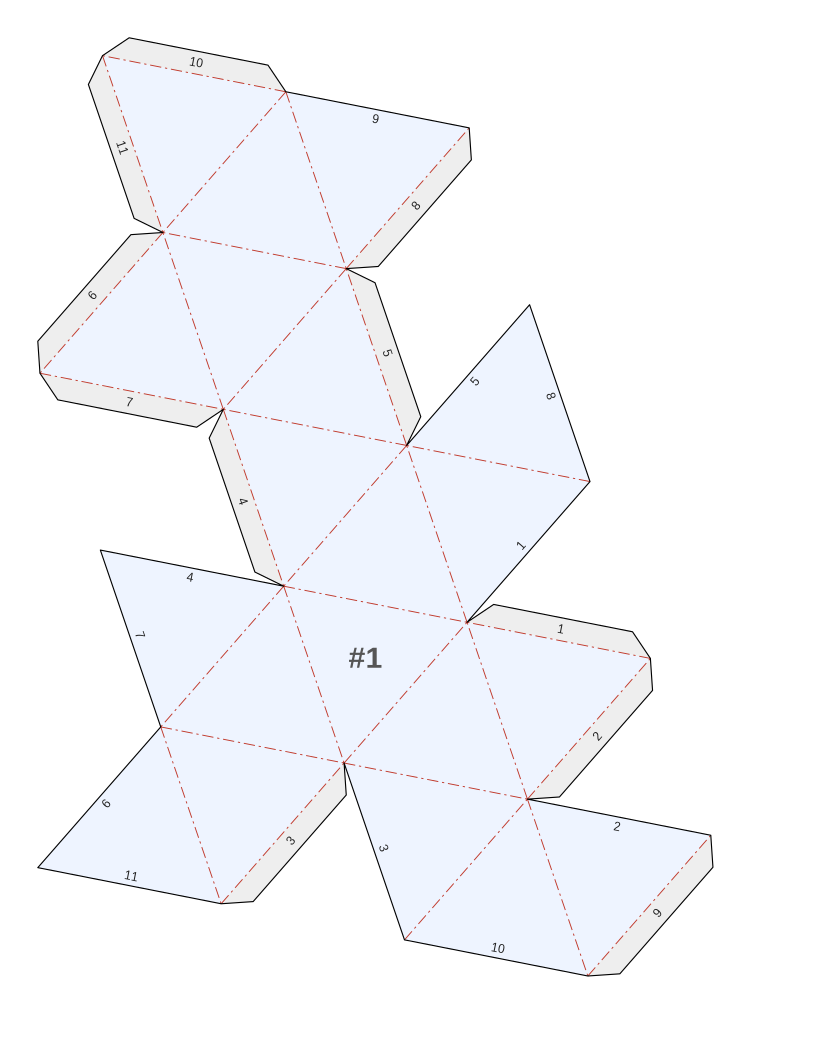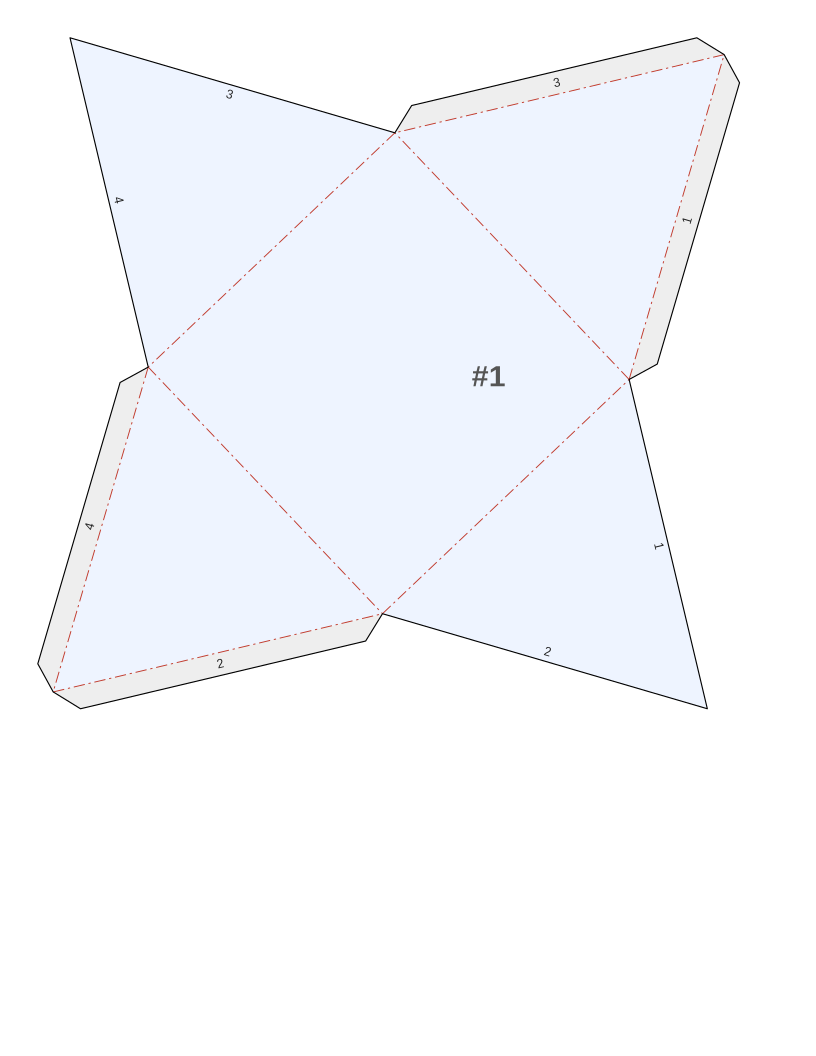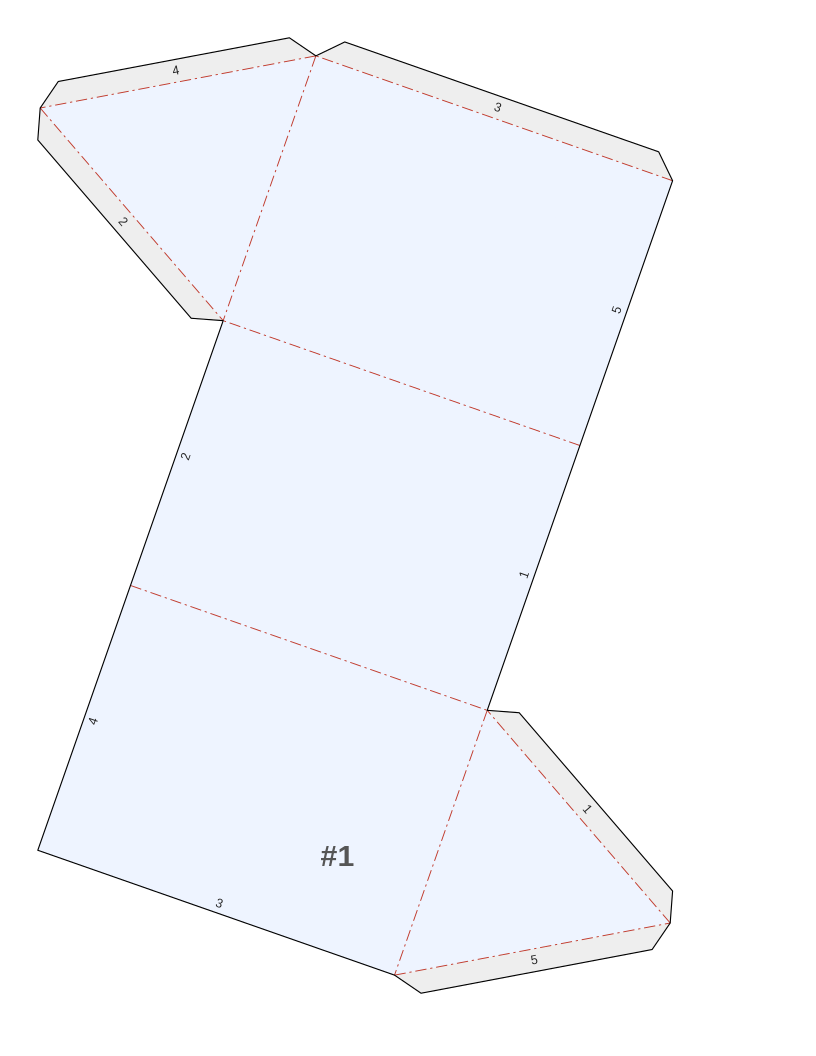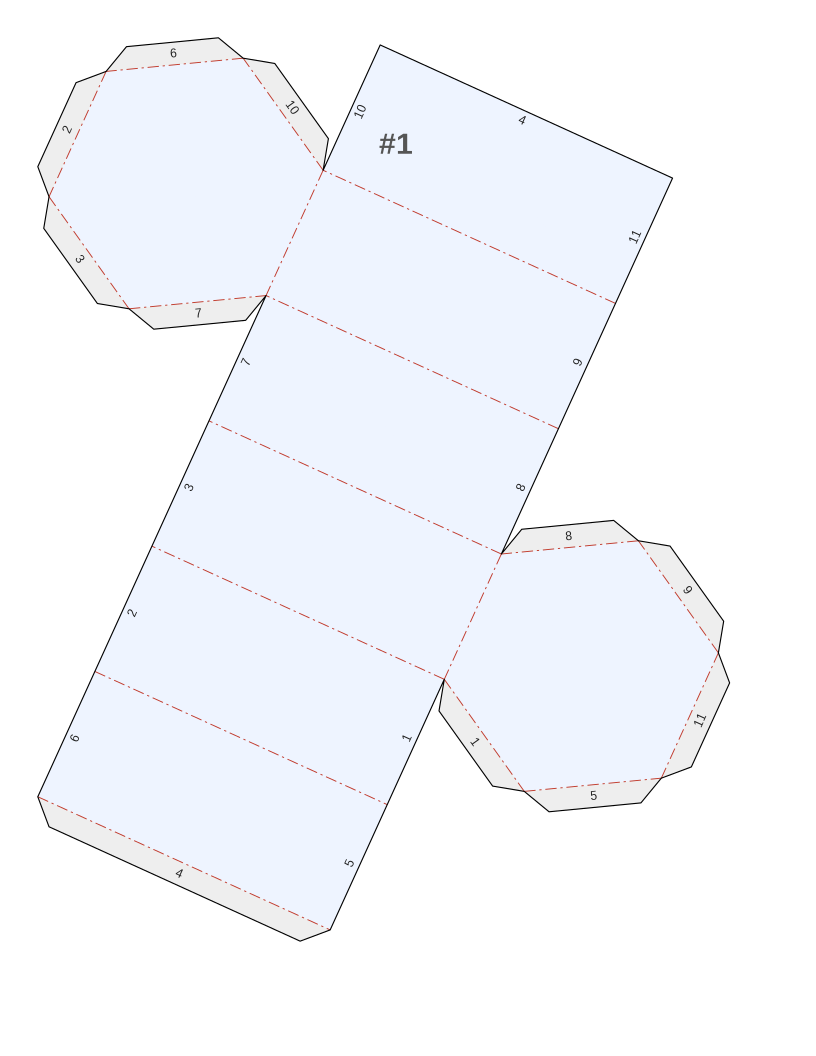
Printable geometry nets

Nine solids as free PDF templates, from the cube to the icosahedron. Each net fits on one US Letter page as a single piece, with glue tabs, matching numbers and fold lines. They were made by the FoldOwl tool itself.

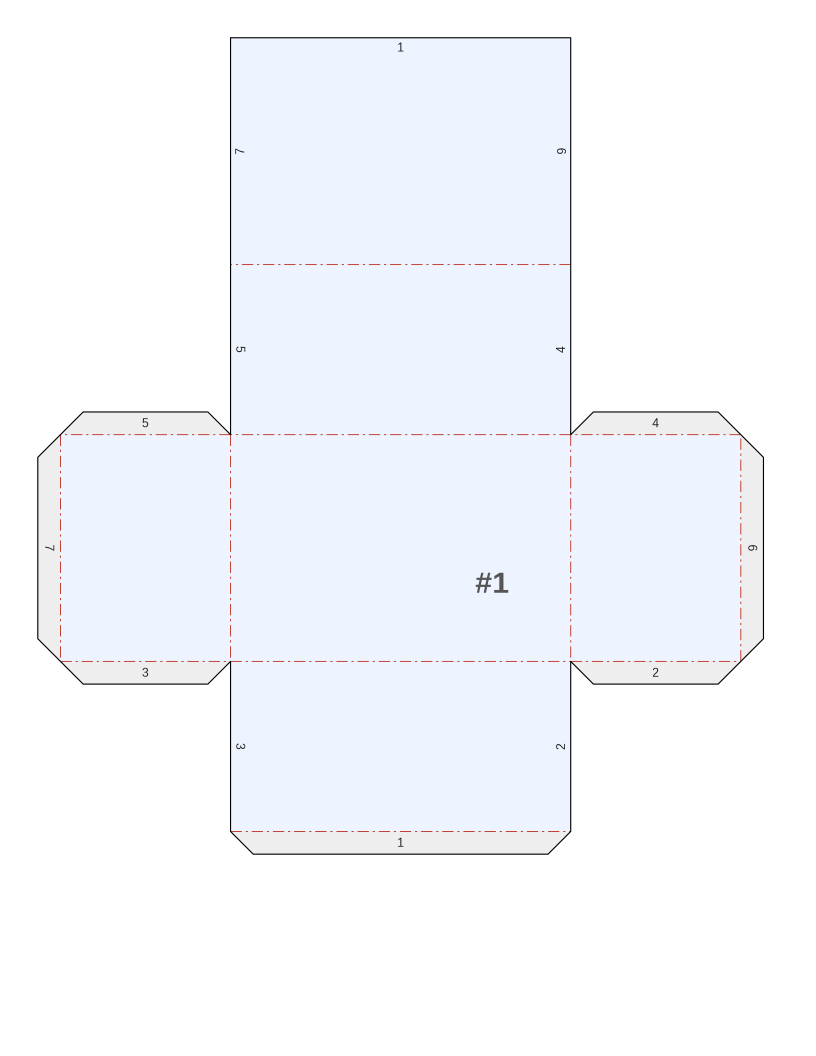
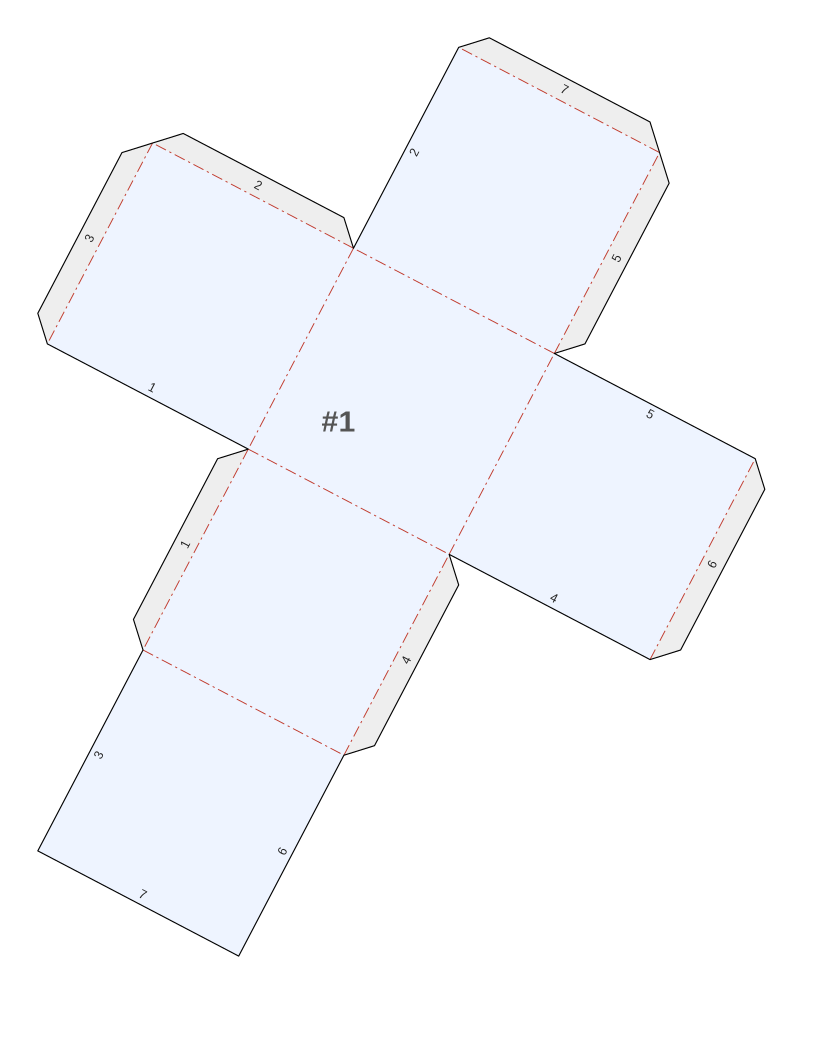
Cube as a 3D view Geometry net: Cube with glue tabs and numbers

Cube

6 faces · 8 vertices · 12 edges
6 squares · edge length 2.36 in

The classic first build. For a game die, draw the pips before you cut it out.
Download PDF (Letter) A4

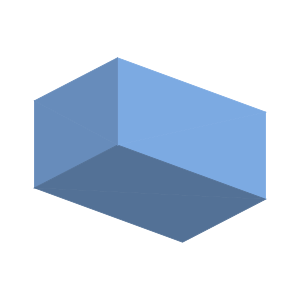
Rectangular prism (cuboid) as a 3D view Geometry net: Rectangular prism (cuboid) with glue tabs and numbers

Rectangular prism (cuboid)

6 faces · 8 vertices · 12 edges
6 rectangles (proportions 3 : 2 : 1.5) · longest side 3.5 in

Good for small boxes and for comparing surface area and volume.

Download PDF (Letter) A4

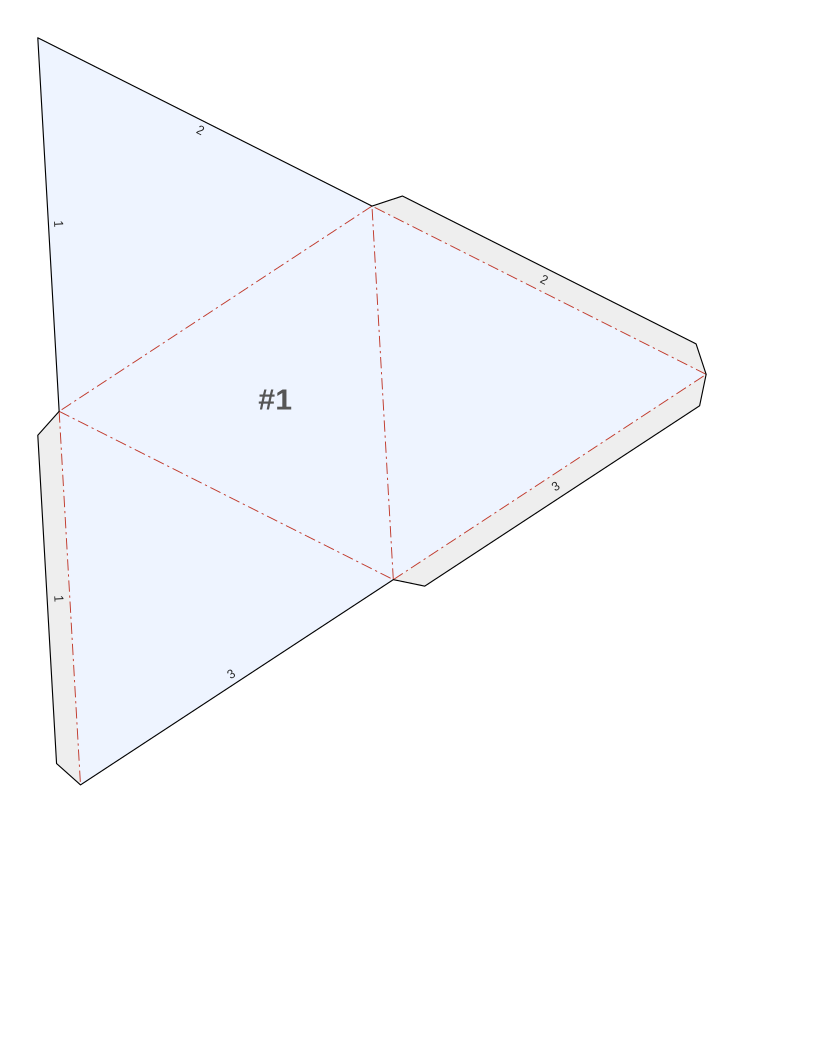
Tetrahedron as a 3D view Geometry net: Tetrahedron with glue tabs and numbers

Tetrahedron

4 faces · 4 vertices · 6 edges
4 equilateral triangles · edge length 3.9 in

The simplest Platonic solid: a triangular pyramid made of four identical triangles.
Download PDF (Letter) A4

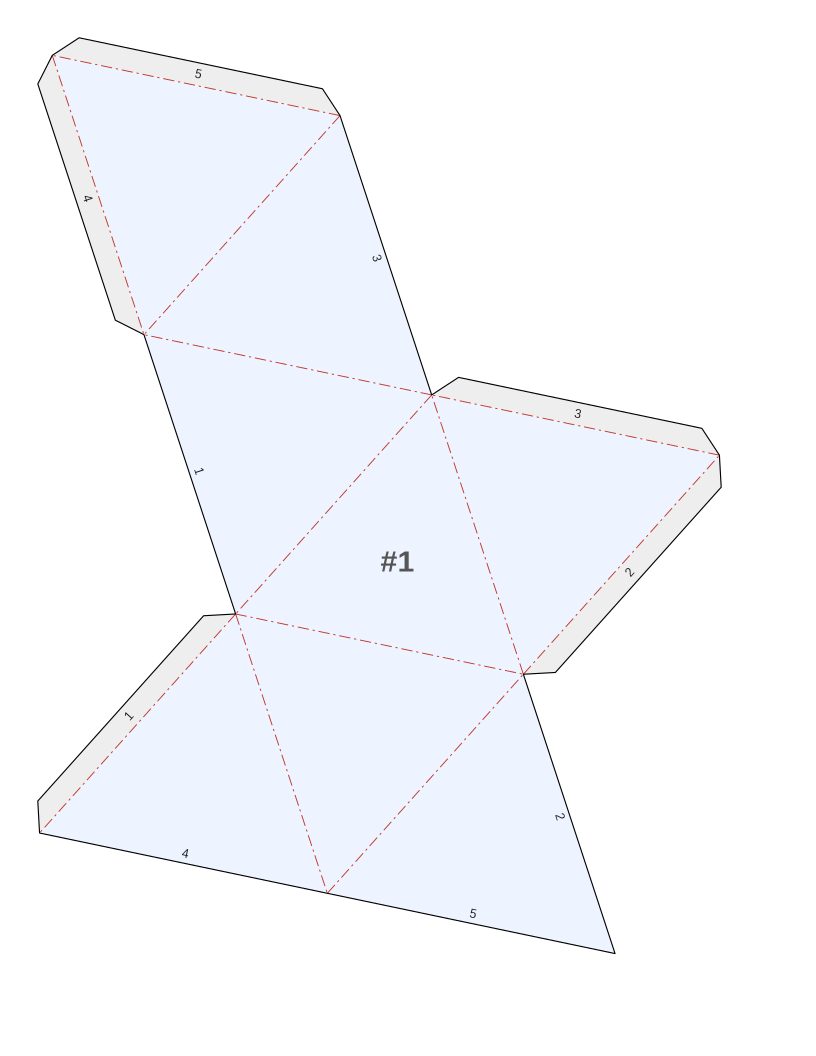
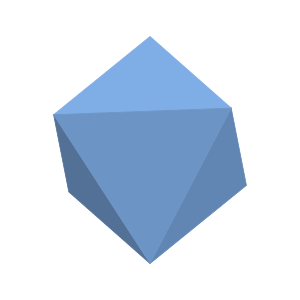
Octahedron as a 3D view Geometry net: Octahedron with glue tabs and numbers

Octahedron

8 faces · 6 vertices · 12 edges
8 equilateral triangles · edge length 3.1 in

Looks like two pyramids base to base. Makes a nice eight-sided die (d8).
Download PDF (Letter) A4

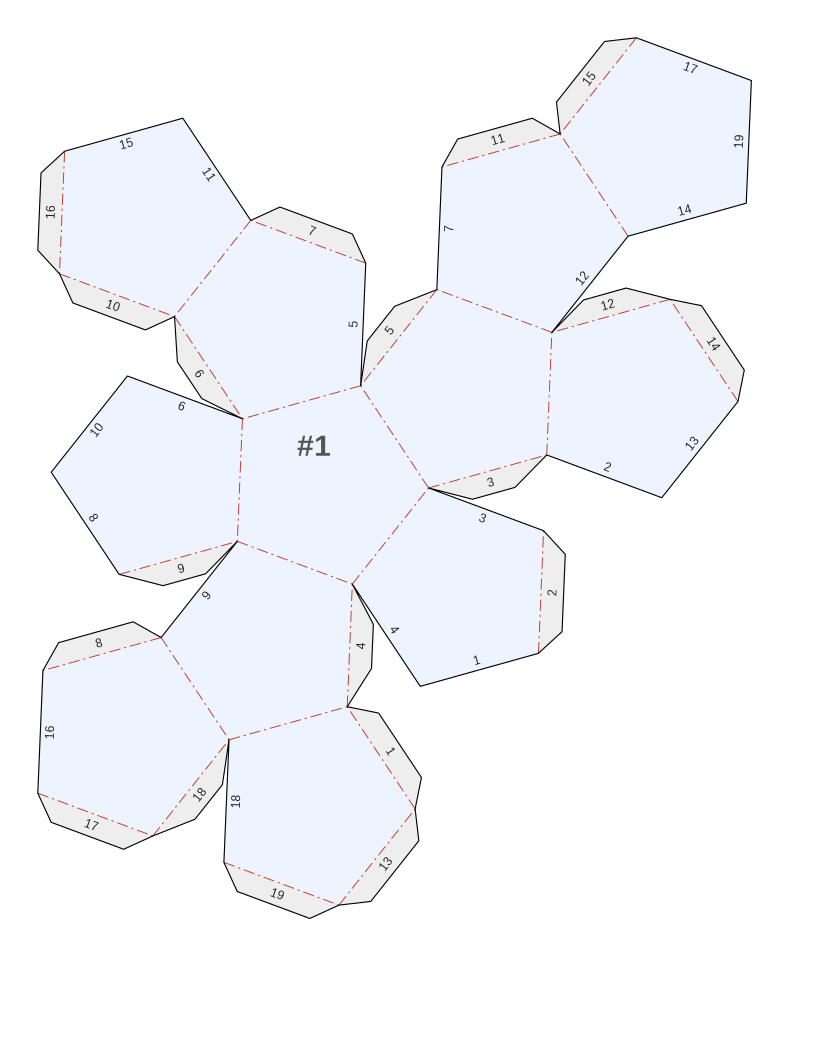
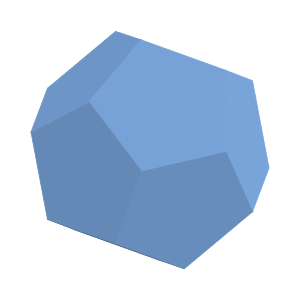
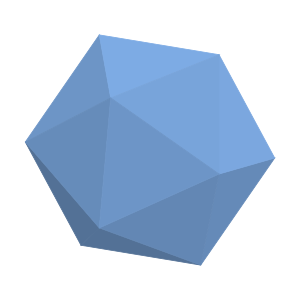
Dodecahedron as a 3D view Geometry net: Dodecahedron with glue tabs and numbers

Dodecahedron

12 faces · 20 vertices · 30 edges
12 regular pentagons · edge length 1.26 in

Popular as a desk calendar: each of the twelve faces gets one month.
Download PDF (Letter) A4

Icosahedron as a 3D view Geometry net: Icosahedron with glue tabs and numbers

Icosahedron

20 faces · 12 vertices · 30 edges
20 equilateral triangles · edge length 1.93 in

The Platonic solid with the most faces – the shape of a d20 from tabletop games.
Download PDF (Letter) A4

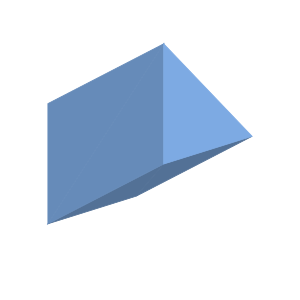
Square pyramid as a 3D view Geometry net: Square pyramid with glue tabs and numbers

Square pyramid

5 faces · 5 vertices · 8 edges
1 square, 4 isosceles triangles · longest side 3.5 in

Like the pyramids of Giza, only smaller. Base and height are in the ratio 2 : 1.4.
Download PDF (Letter) A4

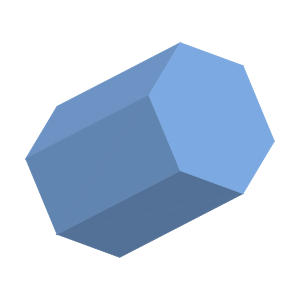
Triangular prism as a 3D view Geometry net: Triangular prism with glue tabs and numbers

Triangular prism

5 faces · 6 vertices · 9 edges
2 equilateral triangles, 3 rectangles · longest side 3.9 in

The shape of a tent or a classic chocolate bar box.
Download PDF (Letter) A4

Hexagonal prism as a 3D view Geometry net: Hexagonal prism with glue tabs and numbers

Hexagonal prism

8 faces · 12 vertices · 18 edges
2 regular hexagons, 6 rectangles · longest side 3.3 in

Like a honeycomb cell or a pencil without its tip.

Download PDF (Letter) A4

How to build a net

  1. PrintPrint the PDF at “Actual size” or 100%, not “Fit to page”. Light cardstock (65–80 lb cover) works best.
  2. Score and cutTrace the red dash-dot fold lines with an empty ballpoint pen and a ruler, then cut along the black lines.
  3. FoldEvery fold line is a mountain fold: the printed side stays outside. Fold the gray tabs back as well.
  4. GlueSame number means: these go together. Glue the numbered tab from the inside under the edge with the same number. Close the last face from the outside and press it from within with a pencil.

For the classroom: faces, vertices and edges

Count along: every one of these solids follows Euler’s formula vertices + faces − edges = 2. It holds as long as the solid has no holes.

SolidFacesVerticesEdgesV + F − E
Cube68122
Rectangular prism (cuboid)68122
Tetrahedron4462
Octahedron86122
Dodecahedron1220302
Icosahedron2012302
Square pyramid5582
Triangular prism5692
Hexagonal prism812182
  • Most solids have more than one net. The cube has 11 different nets, the tetrahedron only 2, the dodecahedron and the icosahedron 43,380 each.
  • The five Platonic solids have identical regular faces, with the same number meeting at every vertex: tetrahedron, cube, octahedron, dodecahedron and icosahedron.
  • For group work: each group builds one solid and checks the formula. The net also shows surface area as the sum of the individual faces.

Your own shapes and figures

Want to fold something else, like an animal, a figure or a helmet? Load a 3D model (OBJ, STL or GLB) into the papercraft maker. It unfolds any model the same way as these solids. Building tips are in our guide Papercraft for beginners.

Frequently asked questions

Can I copy the templates for my class?
Yes. You may print and copy the nets as often as you like for personal use and in the classroom. Please don’t offer them for download or sale yourself – link to this page instead.
Can I print the solids larger or smaller?
Yes. The scale setting in the print dialog makes the whole net larger or smaller, for example 70% for a smaller version, or Tabloid paper at 129% for a larger one. The tabs scale with it.
Why is the net tilted on the page?
The tool rotates each net so the solid comes out as large as possible on the sheet. The angle makes no difference when you build it.
Which glue works best?
Liquid craft glue, or a glue stick for large areas. For small tabs, a thin glue with a fine tip is best. More in our guide Gluing tabs.

Fold your own 3D model

The maker turns any model into a papercraft template – free, right in your browser.

Try it free